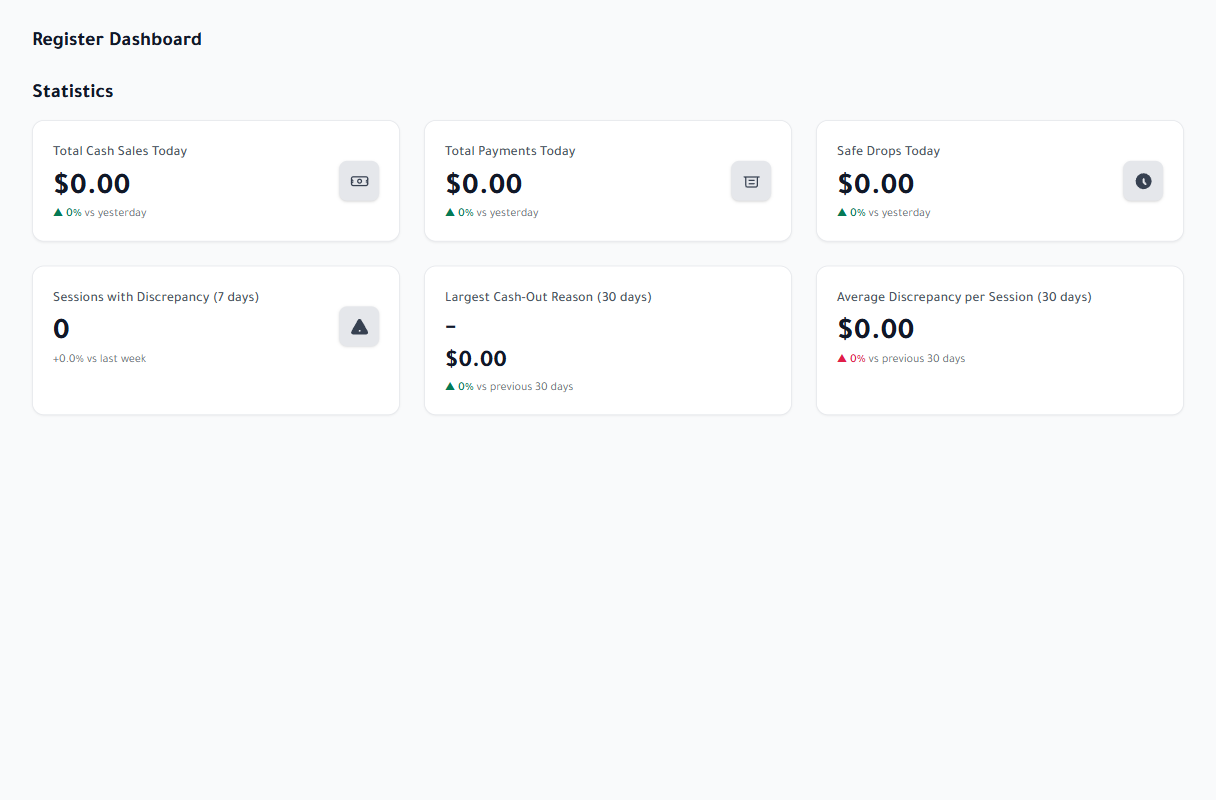
Closing a restaurant till is more than comparing total sales with money in the drawer. You need payment methods, opening float, cash movements, refunds, a physical count, and a record of who counted and approved the result.
Quick takeaways
- Open a separate session for each register or cashier as policy requires.
- Record every cash movement with reason, time, and user.
- Turn discrepancy into a state that requires explanation and approval.
Define the session boundary before service
Record opening float and denominations when detailed counting is required, and identify the register, branch, and user. Avoid two shifts sharing one ambiguous record.
An X report gives a reading during service without closing the session, while a Z report represents final close. Make sure the team knows when each applies.
Every cash movement needs a reason
A small expense, float top-up, or safe drop should not disappear into the closing variance. Record it independently with reason, amount, user, and approval when policy requires it.
Separate cash from card, wallet, and bank transfer. Correct reconciliation compares each method with its own expected record rather than combining everything into one number.
- Documented opening float
- Cash in and cash out with a reason
- Refunds and discounts connected to the order
Treat discrepancy as an operating signal
At close, calculate expected, counted, and difference, then require a note or approval according to policy. Repeated differences by user, period, or action may point to training or a confusing procedure.
Keep an audit trail that cannot be silently rewritten after approval. If a correction is required, use a reversal or amendment record that says who changed what and why.
A disciplined register session makes handover reviewable in minutes and stops every difference becoming an argument without evidence.