Restaurant inventory begins with a consistent item and unit, then an executable recipe, then a movement with a reason. Without that chain, balances may look precise while failing to explain the difference between sales and physical count.
Quick takeaways
- Standardize purchase and usage units before recipes.
- Connect every sold dish to the real recipe.
- Separate waste, transfer, and adjustment from normal recipe usage.
Start with ingredients, units, and suppliers
You may buy oil by the container and use it by the milliliter, or buy meat by the kilogram and portion it by the gram. Define the conversion once and keep one ingredient identity instead of creating a near-duplicate for every supplier.
Record supplier, purchase price, receipt date, and batch when expiry matters. These details support recipe cost and early warnings; they are not administrative decoration.
The recipe connects sales to stock
A recipe defines the quantity of each ingredient for one serving or production batch. When a dish sells, the system calculates usage from the recipe and quantity. Size and modifier choices should adjust the connected ingredients as well.
Review recipes with the kitchen instead of entering them from a theoretical menu. Preparation loss and actual yield matter more than the weight written on the package.
- A clear production quantity
- Documented unit conversion
- Cost that follows purchase prices
Explain variance instead of hiding it in adjustments
Separate purchases, usage, transfers, waste, counts, and adjustments. When every difference carries a reason, management can identify whether the problem is recipe, receiving, storage, or execution.
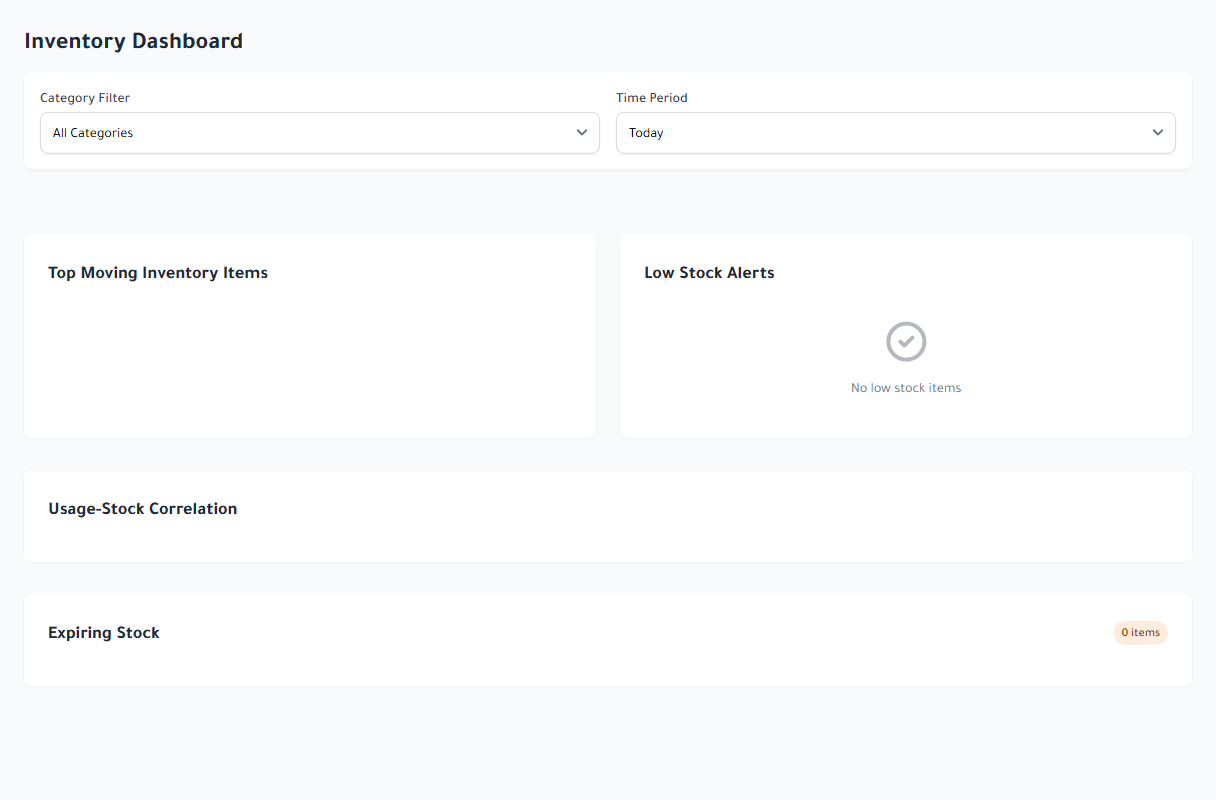
Use low-stock alerts with consumption rate and supplier lead time, not only a fixed threshold. Then watch fast and slow movers and expiry to reduce both outages and trapped working capital.
Useful inventory is a record of reasons, not just balances. Connect ingredients to recipes, sales, and purchases, and dish cost becomes an operating signal instead of a periodic estimate.