The guest experience begins before the dish arrives. When floor staff know where the guest sits, whether a reservation exists, and which order is open, fewer questions bounce between reception, waiter, and till.
Quick takeaways
- Model floor areas the way staff describe the venue.
- Connect each reservation to time, party, and table.
- Make QR ordering and waiter calls part of the same order context.
Build a floor map the team understands immediately
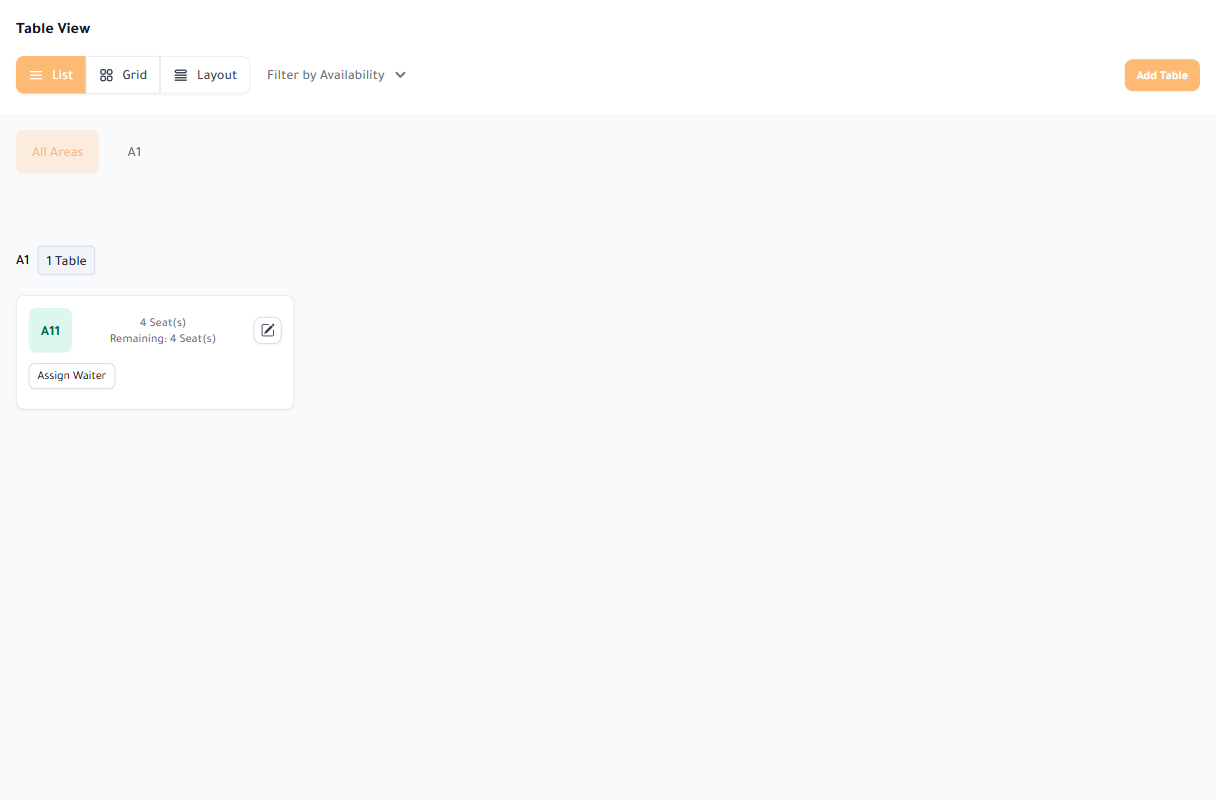
Create areas using the language staff already use: indoor room, terrace, first floor, or private rooms. Give each table a number and capacity, then keep states few and clear—available, reserved, occupied, or cleaning.
Avoid a separate manual state when an open order or confirmed reservation already provides the truth. The closer the state is to the operating record, the more reliable the map becomes.
A reservation is a promise about time and capacity
Capture guest name, contact method, party size, time, and useful notes, with rules that prevent overlapping bookings. Staff must be able to find a reservation quickly and confirm arrival or cancellation.
Use an expected seating duration instead of blocking the table for the whole day. This helps the team manage peak periods without making promises it cannot keep.
QR and waiter requests need the same context
A table QR code should carry the location into the order, so kitchen and till know where it came from. A waiter request should reach staff with the table number rather than as a generic notification.
Give guests a fast, current menu with price and availability while preserving a path to human service. QR should reduce waiting, not move every responsibility onto the guest’s phone.
When the map connects to reservations, orders, and QR, the dining room becomes one source of operating truth instead of a chain of repeated verbal questions.